Author: Junhyeok

  • Feedback is all you need

    When building multi-AI agent systems, you’ll sometimes find that models struggle to carry out instructions with complex requirements.

    Visualizing prompt improvement, model replacement, and critic agent with Nano Banana Pro

    There are several solutions to this problem. The most common ones include improving your prompts, swapping in a more capable LLM, and—the topic I want to discuss today—adding a reflection loop.

    I wanted to explore this subject not only to share insights on building better multi-AI agent systems, but also because I noticed something striking: it closely mirrors how humans operate.

    Improving prompts is analogous to giving clearer, more understandable instructions to a person. Naturally, someone will perform better when they’re given more detailed requirements and guidance on how to achieve them.

    However, if the worker lacks the necessary skills or background knowledge, they’ll still struggle to get the job done.

    The second approach—replacing the model with a more capable one—is like swapping in a more talented worker.

    Someone with greater expertise and a solid foundation of knowledge will undoubtedly produce better results.

    But here’s the catch: talented workers are hard to find, and they demand higher compensation.

    The same applies to LLMs. More capable models cost more, and they hit rate limits more frequently.

    The final approach is to add a critic agent that enables agents to exchange feedback and reflect on their own shortcomings.

    In human terms, imagine a team collaborating—sharing ideas, making judgments together, and giving each other feedback.

    What’s remarkable is that this reflection loop approach often outperforms simply upgrading to a more capable model, both in terms of performance and cost.

    We see the same phenomenon when people work together.

    Sure, sometimes a single exceptional individual can drive great results. But more often, even when each of us has our own weaknesses, we collaborate, grow through mutual feedback, and create something wonderful together.

    So whether we’re architecting multi-AI agent systems or playing our part as members of society, perhaps we should never forget the power of collaboration and feedback—and keep moving forward together.


  • Manipulating the User

    As I develop KAMP—a no-code/low-code agent building platform—I find myself thinking deeply about UI/UX.

    KAMP’s UI—click to visit the Karrot Tech Blog

    At first, I thought UI/UX was simply about “making systems easy for users to use.” Things like displaying the right information where users naturally look, or placing the right buttons where users naturally reach.

    But lately, my thinking has shifted.

    Users often don’t know what they want to do or what they should do—more often than you might expect. This is especially true for products like KAMP, which require a certain level of knowledge to use effectively.

    From this perspective, a UI that delivers great UX isn’t one that places the right buttons where users reach—it’s one that makes users naturally compelled to press those buttons. In other words, a UI that can “manipulate” users. It’s a subtle but important distinction.

    Of course, you should never make users feel frustrated or deceived. UI anti-patterns—like full-screen popups that block everything, or buttons that appear with a delay right where another button used to be—can manipulate users, but they also alienate them.

    So does KAMP have a good UI that guides user behavior? Unfortunately, there’s still much room for improvement.

    The concept of AI agentic systems is still relatively new, and I haven’t yet figured out what kind of UI best helps users intuitively understand how to build agents and do so comfortably.

    The one consolation is that watching various companies—big tech included—each experimenting with their own approaches tells me I’m not the only one who hasn’t cracked this yet.

    Standing at the edge of a path with no clear answers can be daunting, but the excitement outweighs the fear.

    I look forward to the day when I discover something worth sharing—even if it’s not the definitive answer—and can write about it. Until then, I’ll keep wrestling with these questions.

  • On Jams

    A few days ago, a coworker asked me this question:

    What’s your life’s greatest jam, Julius? Outside of work.

    Embarrassingly, I didn’t even catch the word at first. Apparently “jam” here meant “the stuff you’re into for fun.”

    I answered confidently:

    Oh, I’ve got plenty of jams. Camping, going to baseball games, making games… But why do you ask?

    He said he didn’t have any jams of his own and felt like he was just working all day, so he was trying to find some.

    The more I thought about it, the more it made sense.

    Looking back, there was a time when I tried to fill every day with work. Even after clocking out, I’d spend my time building context for work, acquiring relevant knowledge—that sort of thing.

    And yes, sometimes that’s necessary. When you join a new team or face urgent deadlines, it happens naturally.

    But my life looks a little different now. I spend more time on my jams, and I know that time is both joyful and precious.

    Does that mean I’ve lost my sense of responsibility or passion for work? Paradoxically, it’s the opposite. I’m still growing, and I believe I’m making greater and more meaningful contributions to my team and company than ever before.

    How is that possible when I’m putting in less time?

    Humans are emotional beings. Most of us get tired of repetition and feel frustrated when we hit obstacles. These feelings come up even more often when we’re working.

    That’s why it’s essential to have time to release those negative emotions—and I believe the time I spend on my jams serves exactly that purpose.

    Sometimes, stepping back and taking a moment to observe and reflect can be better than pushing forward with relentless focus and effort.

    I’m grateful to my wife, who laughs and chats with me on our camping trips; to the Doosan Bears, who give me the energy to cheer until my voice gives out; to Gemini and Claude, who help me with game development; and to everyone else who becomes my jam or helps me enjoy them.

    At Jamsil baseball stadium
  • Take #N: An ADHD + Perfectionist’s Blogging Challenge

    Every year I resolve to write a blog, and every year it fizzles out. I’ve lost count of how many blogs I’ve signed up for, written one post on, and abandoned.

    But here I am, with 2025 nearly over, giving it another shot.

    To avoid repeating the same failure, I tried to figure out why I kept failing.

    In the end, I blamed my brain chemistry.

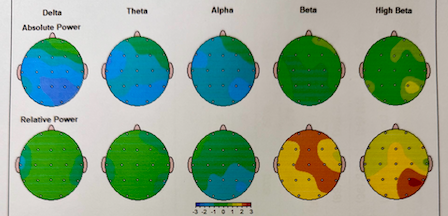
    My brainwave test results, with beta waves going haywire

    I’ve been diagnosed with hyperarousal-type ADHD—the kind where your thoughts never stop—and I also have perfectionist tendencies that make me abandon things the moment they don’t go according to plan or something feels off.

    I have so many things I want to do that blogging often gets pushed down the priority list. And because I obsess over every single sentence, worrying about what readers might think, writing a single post takes forever—which naturally made me drift away from writing altogether.

    Not that many people read it anyway.

    So this time, I’m setting two principles:

    • Write whatever comes to mind without defining a blog theme
    • Stop obsessing over every sentence

    Neither principle aligns with what makes a “good” blog or “well-written” posts, but if I don’t do this, I’ll just fail again.

    Just do it. Stop overthinking.

    With those words etched in my heart, I’ll be back soon to let loose the storm of thoughts swirling in my head.